
Your daily building blocks - Macronutrients and getting the balance right
Carbohydrates, protein, and fats are the three macronutrients your body runs on every single day. You don’t need to count grams or follow a complicated plan to get the balance right. You just need to understand what each one does, where to find them in everyday foods, and a few simple ways to nudge your meals in a more nourishing direction.

Macronutrients - Citations

Macronutrients and metabolic health: what the evidence actually shows
The macronutrient framework — carbohydrates, protein, and dietary fat — is among the most robustly studied areas in nutritional science. The evidence supports several clear conclusions: carbohydrate quality (whole-grain versus refined) is a stronger predictor of metabolic health outcomes than carbohydrate quantity alone; higher-protein diets consistently demonstrate advantages for satiety, body composition, and lean mass preservation; and dietary fat type — unsaturated versus saturated — is more clinically meaningful than total fat intake. No single macronutrient ratio has been universally shown to be optimal. Overall dietary pattern quality, rather than macro arithmetic, is the most consistent predictor of long-term health.

Go on - treat yourself! Citations

Go on - treat yourself!
A treat is not the enemy of a healthy diet — but it works best as the exception, not the rule. The foods you eat on a typical Tuesday have far more bearing on your health than the cake you had at Saturday's birthday party. When your everyday eating is built around nourishing, satisfying food, occasional treats fit in perfectly well. The problems arise when the treats gradually become the defaults. This post is about finding that line — and making the most of the right side of it.

Treats, indulgence, and dietary patterns: what the evidence says
The scientific evidence on treats and dietary indulgence points consistently in one direction: overall dietary patterns are the primary determinant of diet-related health outcomes, and occasional discretionary foods — sweets, takeaways, cakes — have a minimal impact when consumed infrequently within an otherwise balanced diet. Problems arise when high-sugar, high-fat, or ultra-processed foods shift from occasional exceptions to habitual defaults, displacing nutrient-dense foods and elevating intake of added sugars, saturated fat, and sodium. The psychological evidence adds a further dimension: rigid dietary restriction tends to undermine long-term adherence, while flexible, pattern-based approaches support sustainability. The evidence does not support banning treats — it supports keeping them in their appropriate place.

How to live well in a world full of Ultra-Processed Food
Ultra-processed foods (UPFs) make up more than half of what most people in the UK eat — and the evidence linking high consumption to health problems is now substantial. But the goal isn’t to be afraid of every ingredient label. It’s to understand the overall pattern, make a few smart shifts, and give yourself permission to eat imperfectly in a world that wasn’t designed to make healthy eating easy.

What Ultra-Processed Foods actually do to your body
Ultra-processed foods now account for more than half of energy intake in UK adults. The most comprehensive review to date links high UPF consumption to 32 adverse health outcomes, including cardiovascular disease, type 2 diabetes, depression, and all-cause mortality. A controlled inpatient trial found that people eating ultra-processed diets consumed approximately 500 extra calories per day compared to unprocessed diets — without being instructed to. The mechanisms are not fully resolved, but multiple pathways are plausible: hyper-palatability driving overconsumption, displacement of nutrient-dense foods, gut microbiome disruption, and the physical structure of processed food affecting satiety. The evidence is largely observational and causation is not proven — but the breadth and consistency of findings across millions of participants is substantial. The practical implication is a direction of travel, not a ban: more whole and minimally processed foods, fewer heavily manufactured ones.

How to live well in a world full of Ultra-Processed Foods - CITATIONS
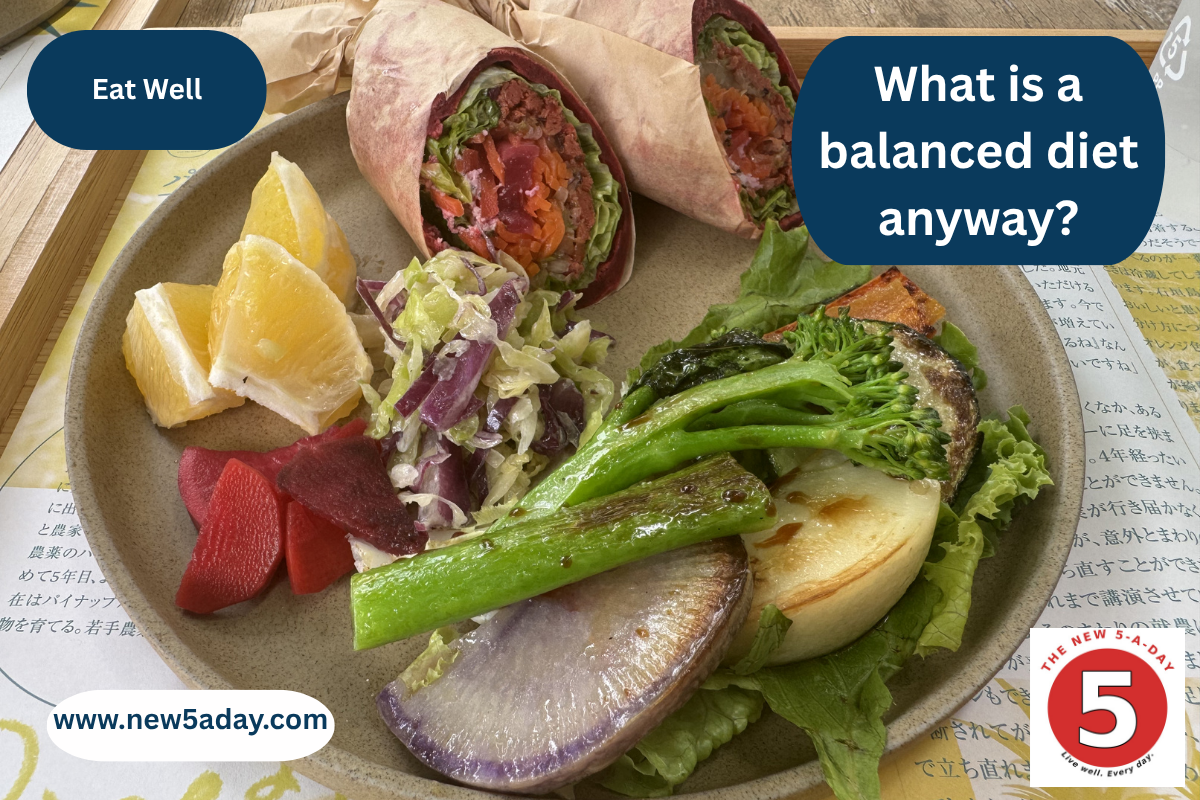
What is a balanced diet, anyway..?
If you’ve ever stood in a supermarket aisle feeling vaguely guilty about what’s in your trolley, or gone down a rabbit hole of contradictory nutrition advice online and emerged more confused than when you started — this post is for you.
“Eat a balanced diet” is one of those phrases that’s everywhere and means almost nothing on its own. Balanced how? Balanced compared to what? And does it have to involve giving up everything you enjoy?
The short answer: no, it doesn’t. The longer answer is actually more interesting — and a lot more reassuring — than most nutrition coverage would have you believe.
Citations 2-1 - What is a balanced diet, anyway..?
Citations cover both the Open Post and the Deep Dive. All citations are formatted in APA 7th edition. Verify via Consensus (consensus.app) or PubMed before use. Total: 28 references across 9 categories.
Deep Dive: What is a balanced diet anyway..?
Key takeaways: A diet rich in whole foods, variety, and fibre consistently reduces risk of cardiovascular disease, type 2 diabetes, several cancers, and early death. The Mediterranean dietary pattern has the strongest evidence base. Dietary diversity drives gut microbiome health. Ultra-processed foods are linked to 32+ adverse health outcomes in the largest umbrella review to date. No single nutrient is the villain — overall pattern is what matters.

Eat Well - Pillar 2 of the New 5-a-day
Eat Well is Pillar 2 of the New 5-a-day. Eating the best we can is so important to being healthy and active, but the sheer volume of conflicting advice can be daunting. We will share practical, actionable insights to help you eat well every day.