
Good morning! Rise and shine!
The first hour of your day is quietly powerful. A few simple habits — a bit of daylight, a glass of water, a little movement, and a pause before you pick up your phone — can shift how alert, calm, and focused you feel for the rest of the day. A good morning routine is not the longest or most impressive one. It is the short, sensible one you can actually repeat most days. Start with one or two small things, keep them consistent, and build from there.

Rise & Shine: The Science of Morning Routines
This Deep Dive examines four interrelated questions that sit at the heart of morning routine research: what physiological mechanisms make the first hour after waking particularly influential; how circadian timing, light exposure, and cortisol regulation interact to affect daily functioning; what evidence supports specific morning behaviours for cognitive performance, mood, and sleep quality; and how habit formation science applies to establishing sustainable morning practices.
The evidence base draws on circadian biology research, randomised controlled trials of morning light therapy, cortisol awakening response studies, and meta-analyses of habit formation interventions. Key methodological limitations are noted where they affect the interpretation of findings.
The bedtime habit: how what you do before bed shapes how well you sleep
What you do in the hour or two before bed has a surprisingly big effect on how quickly you fall asleep and how well you stay asleep. Good bedtime habits — consistent timing, winding down gradually, dimming the lights, stepping away from screens — help your body and brain shift smoothly into sleep mode. Habits that work against you — late caffeine, alcohol, heavy meals, and staying mentally switched on until the moment your head hits the pillow — can make sleep harder to find, and harder to keep. The good news: small, consistent changes can make a genuine difference.
Bedtime habits and sleep quality: what the science actually shows
The evidence consistently supports a set of behaviours in the hours before sleep that promote faster sleep onset, better sleep continuity, and improved sleep quality. The strongest evidence exists for consistent sleep scheduling, light reduction in the evening (particularly blue-spectrum light from screens), caffeine avoidance in the afternoon and evening, and limiting alcohol close to bedtime. Pre-sleep cognitive arousal — an overactive, problem-solving mind at bedtime — is a key driver of insomnia and responds well to structured wind-down behaviours and cognitive techniques. Bedroom environment (temperature, darkness, noise) plays a supporting but meaningful role. Sleep hygiene advice alone is insufficient for clinical insomnia, where cognitive behavioural therapy for insomnia (CBT-I) represents the gold-standard treatment, but it remains valuable background guidance for the general population.
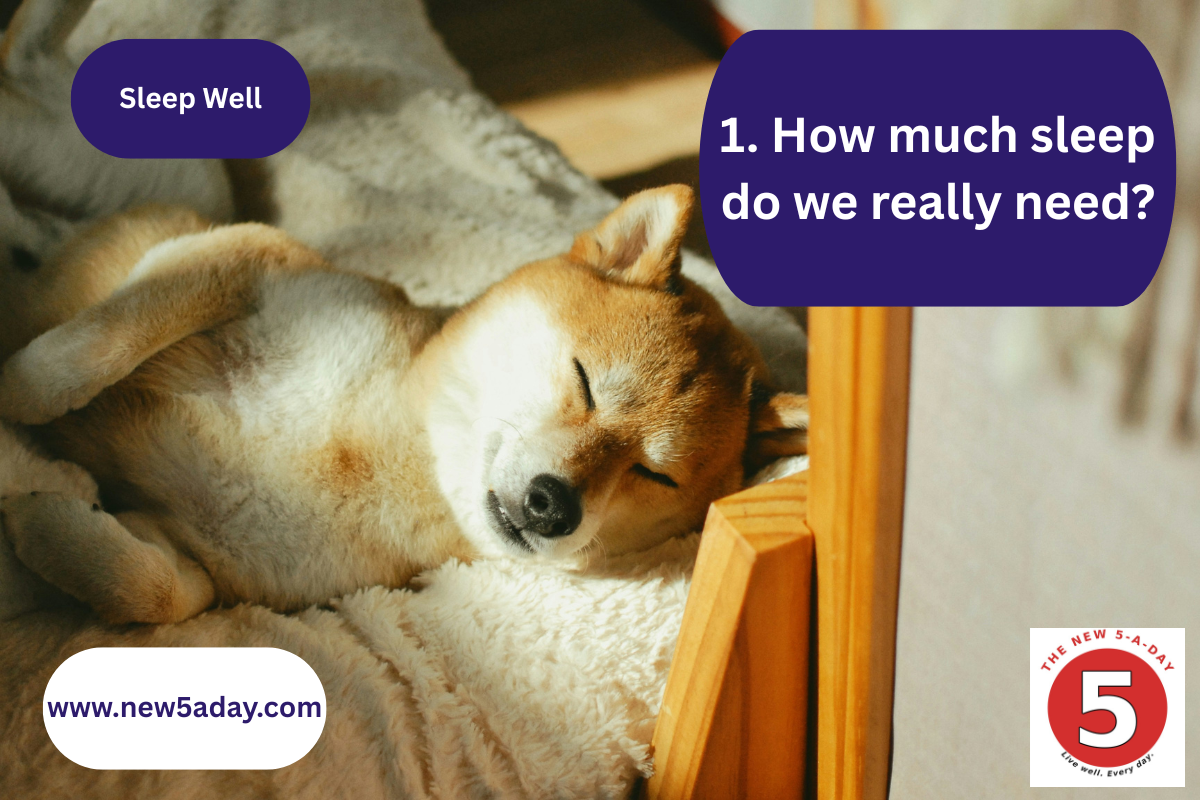
Sleep well 1 - How much sleep do we really need?
Most healthy adults need between 7 and 9 hours of sleep a night. That is not a suggestion or a lifestyle preference — it is what the evidence consistently shows, backed by sleep researchers and medical bodies around the world. Yet a significant number of people are regularly getting less, and most of them think they’re coping fine. This post looks at what sleep actually does for you, what happens when you cut it short, how to find your own personal sweet spot, and a few simple changes that make better sleep more likely — without requiring you to become a different person.