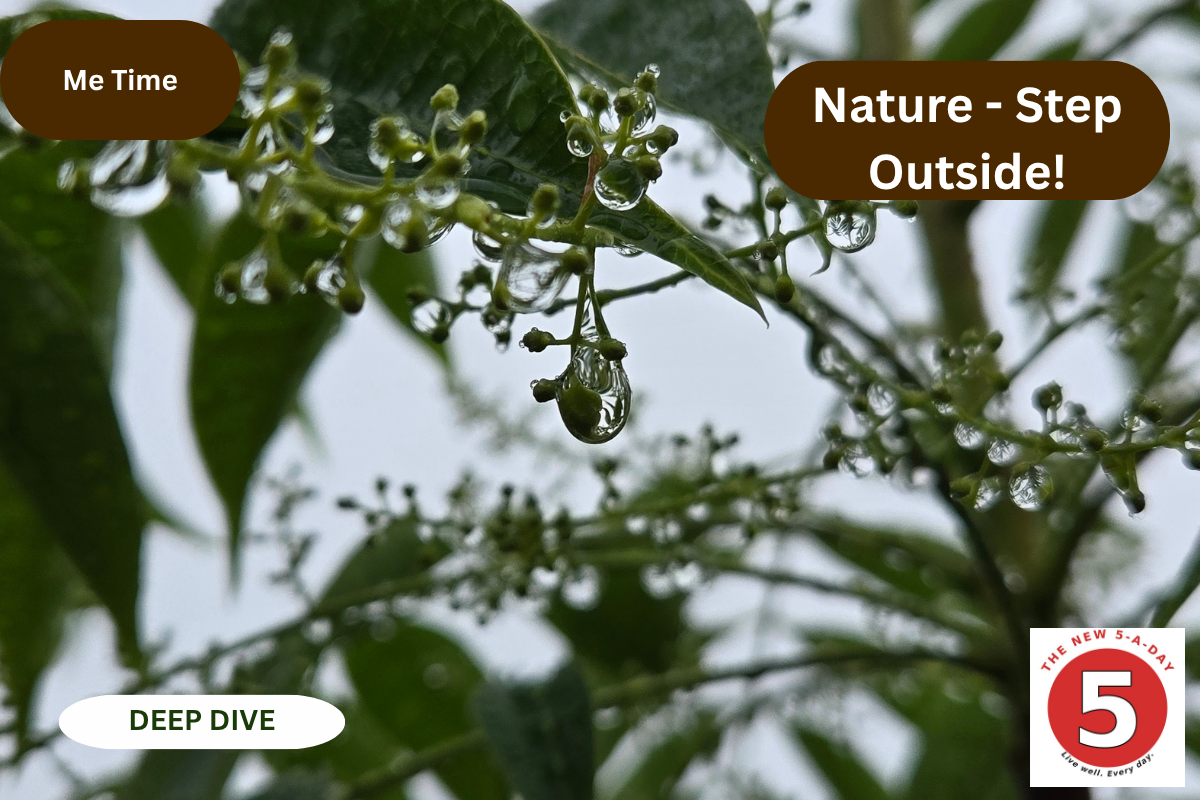
The neuroscience and epidemiology of nature exposure, dose-response relationships, mechanisms of benefit, and the case for everyday contact with green and blue environments
Key takeaways: Exposure to green and blue natural environments is associated with consistent and replicable improvements in mental health, cognitive restoration, mood, and stress physiology. Epidemiological evidence links greater access to green space with lower rates of depression and anxiety, reduced blood pressure and cardiovascular risk, and lower all-cause mortality, independent of physical activity levels. Two principal theoretical frameworks — Stress Recovery Theory and Attention Restoration Theory — provide mechanistic accounts supported by psychophysiological research. The dose-response relationship is relatively shallow: meaningful benefits have been observed with sessions of 15–30 minutes, and weekly green-space time in the range of 30 minutes to two hours captures substantial gain. Urban green and blue spaces produce real benefits, making nature a health resource accessible to the majority of the population without specialist equipment or travel. The case for incorporating regular contact with natural environments into daily routines is well-supported by the current evidence base.
Companion to: Me-Time Open Post 4-5 — Step outside. This Deep Dive examines the evidence base in greater technical depth. Readers seeking the accessible introduction should begin with the Open Post.
The Open Post makes the case that everyday contact with green and blue natural environments produces meaningful benefits for mental and physical health — and that urban green spaces, however modest, qualify as genuine nature for these purposes. This Deep Dive examines the evidence behind those claims in greater depth: the theoretical frameworks through which researchers understand nature’s effects, the neuroscience and psychophysiology of nature exposure, the epidemiological evidence on health outcomes, the dose-response data, and the specific question of how urban nature compares to more expansive countryside environments.
How researchers study nature and health
The evidence base for nature and health draws on a diverse set of study designs. Large prospective cohort studies — some drawing on national health records linked to satellite-derived greenness measures across hundreds of thousands of participants — provide the most reliable epidemiological estimates of association between green-space exposure and health outcomes. They have sufficiently large sample sizes to detect modest effects and to control statistically for known confounders including age, sex, socioeconomic status, physical activity, and pre-existing health conditions.
Experimental studies randomise or assign participants to walks in natural versus urban settings and measure psychophysiological outcomes — cortisol levels, blood pressure, heart rate variability, self-reported mood, and attention test performance — before and after. These designs provide causal evidence for mechanisms but are limited by small samples, short follow-up, and the difficulty of blinding participants to their condition.
Systematic reviews and meta-analyses synthesise findings across multiple primary studies and produce the most reliable overall estimates of effect size. Several such reviews are central to the evidence summarised here. The field has matured substantially over the past decade: the more recent large-scale systematic reviews and prospective cohort studies meet high methodological standards and produce consistent findings across populations and countries.
Theoretical frameworks: why does nature affect health?
Two theoretical frameworks dominate the literature on nature and psychological restoration. Both have attracted substantial empirical support and inform the mechanistic interpretation of experimental and epidemiological findings.
Stress Recovery Theory
Stress Recovery Theory (SRT), developed by Ulrich and colleagues, proposes that natural environments trigger rapid, largely automatic psychophysiological recovery from stress via the parasympathetic nervous system. Exposure to natural settings — particularly those featuring water, vegetation, and spatial openness — is hypothesised to activate restorative responses that lower physiological arousal: reduced cortisol secretion, decreased heart rate, lower blood pressure, and reduced muscle tension. The theoretical basis draws on evolutionary psychology, proposing that human stress physiology is calibrated to respond positively to environments associated with safety and resource availability across evolutionary timescales.
Experimental studies have found that exposure to natural scenes reduces cortisol and sympathetic nervous system activity more rapidly than exposure to urban scenes following a controlled stress induction. Psychophysiological recovery is measurable within minutes, which helps explain why even brief contact with green spaces produces detectable effects on mood and stress.
Attention Restoration Theory
Attention Restoration Theory (ART), developed by Rachel and Stephen Kaplan, distinguishes between directed attention — the effortful, voluntary focus required for work, decision-making, and goal-directed tasks — and involuntary or fascination-based attention, which is engaged by inherently interesting stimuli without requiring effort. Sustained directed attention depletes over time, producing the cognitive fatigue familiar to most knowledge workers. Natural environments, ART proposes, engage involuntary fascination — moving leaves, birdsong, water, natural light — allowing directed attention to recover. This restoration requires environments sufficiently removed from the demands of ordinary life.
KEY RESEARCH
Berto, R. (2014). The role of nature in coping with psycho-physiological stress: A literature review on restorativeness. Behavioral Sciences, 4, 394–409. https://doi.org/10.3390/bs4040394
This review synthesised the empirical evidence for both SRT and ART, confirming that natural settings reliably outperform urban settings in measures of stress recovery and attention restoration across multiple experimental paradigms. Restoration effects can also occur with indirect nature exposure — viewing natural scenes through windows or on screens — though typically at a lower magnitude than direct outdoor contact.
KEY RESEARCH
Kimura, T., Yamada, T., Hirokawa, Y., & Shinohara, K. (2021). Brief and indirect exposure to natural environment restores the directed attention for the task. Frontiers in Psychology, 12. https://doi.org/10.3389/fpsyg.2021.619347
This study demonstrated that even brief and indirect exposure to natural environments — including viewing nature images — produced measurable improvements in directed attention on standardised cognitive tasks compared with non-nature control conditions. The finding extends the practical relevance of ART to settings where direct outdoor access is limited, while confirming that direct, immersive contact produces the strongest effects.
Mental health: mood, stress, rumination, and anxiety
The evidence for mental health benefits of nature exposure is the most extensive and consistent in the field. Systematic reviews and meta-analyses reliably find associations between access to green space and lower rates of depression, anxiety, and psychological distress, alongside improvements in positive affect and subjective wellbeing across diverse populations and geographies.
KEY RESEARCH
Coventry, P., Brown, J., Pervin, J., Brabyn, S., Pateman, R., Breedvelt, J., Gilbody, S., Stancliffe, R., McEachan, R., & White, P. (2021). Nature-based outdoor activities for mental and physical health: Systematic review and meta-analysis. SSM — Population Health, 16. https://doi.org/10.1016/j.ssmph.2021.100934
This systematic review and meta-analysis synthesised evidence from randomised controlled trials and prospective cohort studies on nature-based outdoor activities. It found consistent evidence of significant reductions in depressive mood and anxiety and significant improvements in positive affect associated with nature-based activity, including walking, gardening, and green exercise. Effects were meaningful across a range of participant groups, including clinical populations, and were observed across diverse settings including urban parks, community gardens, and woodland environments.
KEY RESEARCH
Liu, Z., Chen, X., Cui, H., Yu, Y., Gao, N., Li, X., Meng, X., Lin, H., Abudou, H., Guo, L., & Liu, Q. (2023). Green space exposure on depression and anxiety outcomes: A meta-analysis. Environmental Research, 116303. https://doi.org/10.1016/j.envres.2023.116303
This meta-analysis specifically examined the association between green space exposure and depression and anxiety outcomes, confirming that higher neighbourhood greenness was significantly associated with lower risk of both conditions. Effect sizes were modest but replicated across studies from multiple countries and using multiple methods of measuring green-space exposure, lending confidence to the direction and reliability of the association.
Rumination and cognitive restoration
KEY RESEARCH
Lopes, S., Lima, M., & Silva, K. (2020). Nature can get it out of your mind: The rumination reducing effects of contact with nature and the mediating role of awe and mood. Journal of Environmental Psychology, 71, 101489. https://doi.org/10.1016/j.jenvp.2020.101489
This study examined the effect of a 30-minute walk in an urban park compared with a 30-minute walk on a city street on self-reported rumination and negative mood. The park walk produced significantly greater reductions in rumination and negative affect, an effect partially mediated by the experience of awe and improved mood. Rumination is a transdiagnostic risk factor for depression and anxiety, making its reduction a clinically meaningful outcome. The finding supports the view that urban park environments produce restorative effects beyond simple pleasure or distraction.
KEY RESEARCH
Bray, I., Reece, R., Sinnett, D., Martin, F., & Hayward, R. (2022). Exploring the role of exposure to green and blue spaces in preventing anxiety and depression among young people aged 14–24 years living in urban settings: A systematic review and conceptual framework. Environmental Research, 114081. https://doi.org/10.1016/j.envres.2022.114081
This systematic review focused on younger populations, finding evidence that brief exposures to parks and forested environments — walks of approximately 15 minutes — improved mood and reduced state anxiety in 14–24-year-olds compared with urban routes. Proposed mechanisms included reductions in rumination, increased mindfulness, and attentional restoration. The review developed a conceptual framework linking green-space access with anxiety and depression prevention via these intermediate psychological pathways.
Physical health: cardiovascular outcomes, blood pressure, and mortality
Beyond mental health, the epidemiological literature links greater green-space access with a range of favourable physical health outcomes, including reduced cardiovascular risk, lower blood pressure, lower rates of type 2 diabetes, and reduced all-cause mortality. These associations are observed even after controlling for physical activity — suggesting that pathways beyond exercise mediation contribute, including stress reduction, air quality improvement, and the psychological mechanisms described above.
KEY RESEARCH
Twohig-Bennett, C., & Jones, A. (2018). The health benefits of the great outdoors: A systematic review and meta-analysis of greenspace exposure and health outcomes. Environmental Research, 166, 628–637. https://doi.org/10.1016/j.envres.2018.06.030
This systematic review and meta-analysis represents one of the most comprehensive syntheses of the epidemiological evidence on green space and health outcomes. Drawing on data from over 140 studies, it found that higher green-space exposure was associated with significantly reduced risks of type 2 diabetes, cardiovascular disease, premature all-cause mortality, and preterm birth, and with reduced salivary cortisol, diastolic blood pressure, and heart rate. Associations were independent of physical activity, supporting the view that mechanisms beyond exercise contribution are involved.
KEY RESEARCH
Zhao, Y., Bao, W., Yang, B., Liang, J., Gui, Z., Huang, S., Chen, Y., Dong, G., & Chen, Y. (2021). Association between greenspace and blood pressure: A systematic review and meta-analysis. The Science of the Total Environment. https://doi.org/10.37766/inplasy2021.10.0033
This meta-analysis specifically examined the association between green-space exposure and blood pressure, finding small but statistically significant reductions in both systolic and diastolic blood pressure associated with greater neighbourhood greenness. Blood pressure is one of the most important modifiable risk factors for cardiovascular disease and stroke; even modest population-level reductions carry substantial public health significance given the prevalence of hypertension.
KEY RESEARCH
Keith, R., Hart, J., & Bhatnagar, A. (2024). Greenspaces and cardiovascular health. Circulation Research, 134(9), 1179–1196. https://doi.org/10.1161/circresaha.124.323583
This 2024 review in a high-impact cardiovascular journal confirmed that exposure to green and blue spaces is associated with better cardiovascular outcomes through multiple pathways: reduced chronic stress and cortisol, lower ambient air pollution, noise reduction, increased physical activity, and improved mental health. Mechanistic pathways are probably additive and mutually reinforcing rather than operating in isolation, which helps explain why the cardiovascular signal is observed across study designs.
Dose-response: how much nature is enough?
One of the practically significant questions in the literature is whether there is a dose-response relationship between green-space exposure and health outcomes, and if so, what the shape of that curve is. The evidence suggests that benefits are relatively accessible at modest doses, with a curve that rises steeply at low exposures and then flattens.
KEY RESEARCH
Shanahan, D., Bush, R., Gaston, K., Lin, B., Dean, J., Barber, E., & Fuller, R. (2016). Health benefits from nature experiences depend on dose. Scientific Reports, 6. https://doi.org/10.1038/srep28551
This study examined the dose-response relationship between weekly nature visits and self-reported depression, blood pressure, and social cohesion in an urban Australian population. It found significant benefits at nature visit durations of 30 minutes or more per week, with the greatest incremental gains at lower exposure levels. There was no evidence of a threshold below which nature visits produced no benefit. The authors calculated that if all urban residents visited natural spaces for at least 30 minutes per week, the prevalence of depression could be reduced by approximately 7% at a population level.
Converging evidence from multiple studies suggests that sessions of 15–30 minutes in natural settings produce measurable benefits, and that a cumulative weekly dose in the range of 30 minutes to two hours captures most of the available gain. These thresholds are achievable within ordinary urban routines without specialist travel, planning, or significant time commitment — a finding with substantial implications for public health communication.
Urban green space: does it count?
A consistent finding across the literature is that urban green and blue spaces — parks, canal towpaths, riverside paths, street trees, community gardens, and urban waterways — produce genuine, measurable health benefits, though often at somewhat smaller magnitudes than more expansive countryside or wilderness environments.
KEY RESEARCH
Kondo, M., Fluehr, J., McKeon, T., & Branas, C. (2018). Urban green space and its impact on human health. International Journal of Environmental Research and Public Health, 15. https://doi.org/10.3390/ijerph15030445
This review examined evidence across a broad range of health outcomes linked to urban green-space access and proximity, finding consistent evidence of benefits across mental health, physical activity, cardiovascular outcomes, air quality, and social cohesion. Critically, it identified the quality and safety of urban green spaces as moderating variables: accessible, well-maintained, and safe green spaces produced stronger benefits than those that were degraded, poorly maintained, or perceived as unsafe.
KEY RESEARCH
Browning, M., Rigolon, A., McAnirlin, O., & Yoon, H. (2022). Where greenspace matters most: A systematic review of urbanicity, greenspace, and physical health. Landscape and Urban Planning. https://doi.org/10.1016/j.landurbplan.2021.104233
This systematic review specifically examined whether the health benefits of green space varied by degree of urbanisation. It found that in several outcome domains, the benefits of green-space access were stronger in more urbanised settings — consistent with the hypothesis that the restorative contrast between built and natural environments is greatest where the built environment is most dense and stressful. This is practically significant: urban residents, who might assume nature is less relevant to their lives, may in fact stand to gain the most from it.
KEY RESEARCH
White, M., Elliott, L., Grellier, J., Economou, T., Bell, S., Bratman, G., Cirach, M., Gascon, M., Lima, M., Lohmus, M., Nieuwenhuijsen, M., Ojala, A., Roiko, A., Schultz, P., Van Den Bosch, M., & Fleming, L. (2021). Associations between green/blue spaces and mental health across 18 countries. Scientific Reports, 11. https://doi.org/10.1038/s41598-021-87675-0
This multinational study examined associations between green and blue space access and mental health outcomes across 18 countries, finding consistent associations between higher access and better mental health. Notably, indirect access — including views of greenery from the home — was associated with reduced depression and anxiety symptoms, particularly during COVID-19 lockdown periods. This suggests that even partial or mediated contact with natural environments retains some restorative value, though direct contact remains the more powerful exposure.
Children, adolescents, and life-course considerations
KEY RESEARCH
Moll, A., Collado, S., Staats, H., & Corraliza, J. (2022). Restorative effects of exposure to nature on children and adolescents: A systematic review. Journal of Environmental Psychology. https://doi.org/10.1016/j.jenvp.2022.101884
This systematic review of the restorative effects of nature exposure on children and adolescents found consistent evidence that natural environments reduced stress and mental fatigue and improved attention and mood in younger age groups. Effects were observed across school gardens, urban parks, and countryside environments. The authors noted that developing positive relationships with natural environments in childhood may support lifelong habits of nature engagement — a pathway with potential long-term health implications extending well beyond the individual restorative episodes studied.
The breadth of nature’s effects: a scoping review
KEY RESEARCH
Nejade, R., Grace, D., & Bowman, L. (2022). What is the impact of nature on human health? A scoping review of the literature. Journal of Global Health, 12. https://doi.org/10.7189/jogh.12.04099
This scoping review mapped the breadth of evidence on nature and human health, confirming positive associations across mental health, physical activity, and cardiovascular outcomes, and noting more tentative evidence for improved sleep quality following green-space walking. It identified key moderating factors: the accessibility, safety, and quality of green spaces, the presence of water features and mature trees, and the absence of noise and pollution all shaped the magnitude of observed benefits. The review noted that evidence for several proposed mechanisms — including vitamin D pathways and direct immune modulation via microbial biodiversity — was considerably thinner than for the psychological and cardiovascular pathways.
Limitations and caveats
Several important caveats accompany the evidence base on nature and health. Much of the epidemiological work relies on proxy measures of green-space exposure — satellite-derived vegetation indices, distance to parks, or self-reported visit frequency — rather than direct measurement of the type, duration, and quality of nature contact. These proxies introduce imprecision that can both inflate and attenuate associations.
Green-space access is strongly correlated with socioeconomic status and neighbourhood factors. People with access to safe, high-quality green space also tend to be wealthier, live in less deprived areas, have more time for outdoor activity, and have better baseline health. This confounding is difficult to fully address statistically, and the direction of bias is not always predictable.
The experimental literature is more causally clean but often limited by small samples, self-selected participants, short follow-up, and outcomes that may not fully translate to long-term health effects. The convergence of consistent experimental effects with consistent epidemiological associations is reassuring, but some uncertainty about precise effect sizes and the relative contribution of nature contact compared with other lifestyle factors remains appropriate.
Claims about vitamin D production from outdoor exposure, while biologically plausible, are not directly documented in the key studies reviewed here. Similarly, direct immune modulation via microbial biodiversity in natural environments is biologically interesting but not yet supported by the strength of evidence available for the psychological and cardiovascular pathways.
Bringing it back to The New 5-a-Day
Me-Time is Pillar Four of The New 5-a-Day. Nature sits within this pillar not as a niche interest or a luxury, but as a health-relevant daily practice with a well-established evidence base. The mechanistic pathways through which green-space contact affects health — stress recovery via the autonomic nervous system, attentional restoration, reduced rumination, increased physical activity, cardiovascular benefits, and improved mood — are distinct from and additive to the benefits of other health behaviours.
The practical implications of the evidence are clear. The dose required to produce meaningful benefit is modest and achievable within ordinary urban life. Urban green and blue spaces produce real and measurable benefits, making nature a health resource accessible to the majority of the population without specialist travel or planning. Regularity matters more than intensity or grandeur: frequent short contacts with nearby nature appear to produce a comparable or greater cumulative effect than infrequent larger excursions.
The evidence supports treating regular access to green space as a health resource comparable in category to other well-established behavioural health interventions. It is low-cost, low-risk, broadly accessible, and supported by a convergent body of evidence from experimental, epidemiological, and mechanistic research.
A note on medical advice: This Deep Dive is intended for readers who want to engage with the evidence in more depth. It does not replace professional medical guidance. If you are managing a health condition and considering changes to your activity or lifestyle, please speak to your GP or a qualified health professional.
Want to read further? Full citations for all research referenced in this post are available in the accompanying Reference List.
[View the References →] [Read the Open Post →] [Listen to the Episode →]
The New 5-a-Day | Me-Time 4-5 | Live well. Every day.
