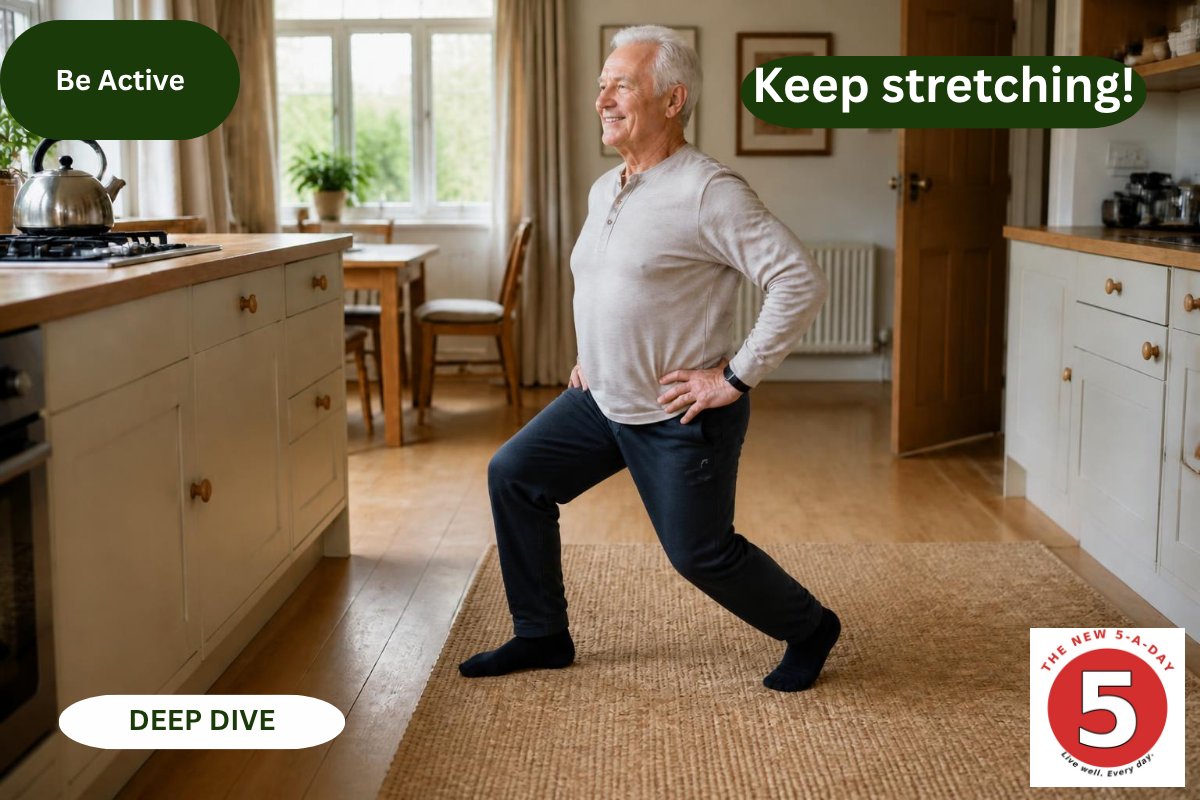
Flexibility across the lifespan: what the evidence actually shows
Flexibility — the capacity of joints and their associated soft tissues to move freely through a full range of motion — declines measurably with age, with hip and shoulder flexibility falling by approximately six degrees per decade from the mid-fifties onwards. This decline is joint-specific and is accelerated by sedentary behaviour, particularly prolonged sitting.
The evidence that regular stretching improves range of motion (ROM) is robust and among the best-established in exercise science. Multiple meta-analyses confirm meaningful chronic ROM gains from programmes lasting two weeks or more. Static stretching and proprioceptive neuromuscular facilitation (PNF) produce the largest long-term improvements; dynamic stretching is better suited to pre-activity warm-up.