Resistance training and health: what the science actually says
Resistance training — any exercise that places muscles under load against an external resistance — is associated with a 10–20% reduction in all-cause mortality and lower rates of cardiovascular disease, type 2 diabetes, and several cancers, independent of aerobic exercise habits. The dose-response relationship is well-characterised: maximal risk reduction occurs at approximately 30–60 minutes per week of muscle-strengthening activity, with benefits plateauing or potentially diminishing at very high volumes. Two to three sessions per week targeting major muscle groups is both the evidence-supported and guideline-recommended target. The mechanisms through which resistance training confers health benefits include improvements in insulin sensitivity, increases in bone mineral density, preservation of lean mass against age-related sarcopenia, favourable shifts in body composition, and neurological adaptations that improve balance, coordination, and functional independence. Resistance training is safe and effective across the adult lifespan, including in older, frail, and osteoporotic populations, when appropriately progressed. No gym, specialist equipment, or high load is required: bodyweight and elastic resistance band protocols produce clinically meaningful improvements in strength, bone density, body composition, and functional capacity.
Stronger every day: why strength training matters and how to fit it into a busy life
Strength training — using your muscles against a load — is one of the most powerful and underrated things you can do for your long-term health. It builds stronger bones, improves balance, reduces the risk of serious conditions like heart disease and type 2 diabetes, and helps you stay capable and confident as you age. It does not require a gym, expensive equipment, or hours of your time. As little as 30 to 60 minutes of strength activity spread across the week can make a meaningful difference. This post shows you exactly how to find that time — without overhauling your life.
Your heart says “Move!”
Cardio — any activity that raises your heart rate for a sustained stretch of time — is one of the most powerful things you can do for your long-term health. It reduces the risk of heart disease, type 2 diabetes, and some cancers. It lifts mood, sharpens thinking, improves sleep, and gives you more energy for everyday life. The best part? You do not need a gym, a running kit, or a free hour. Small, consistent increases in daily movement are enough to make a real difference. This post will show you how to find them.
Now touch your toes! Stretching is so good for you!
Stretching is one of the most underrated things you can do for your body. Done regularly, it improves flexibility and range of motion, keeps your joints moving freely, supports healthy posture, and can bring a genuine sense of calm. It does not require a gym, special kit, or hours of your time. A few minutes a day, done consistently, is enough to make everyday movement feel noticeably easier — and that matters more than most people realise.
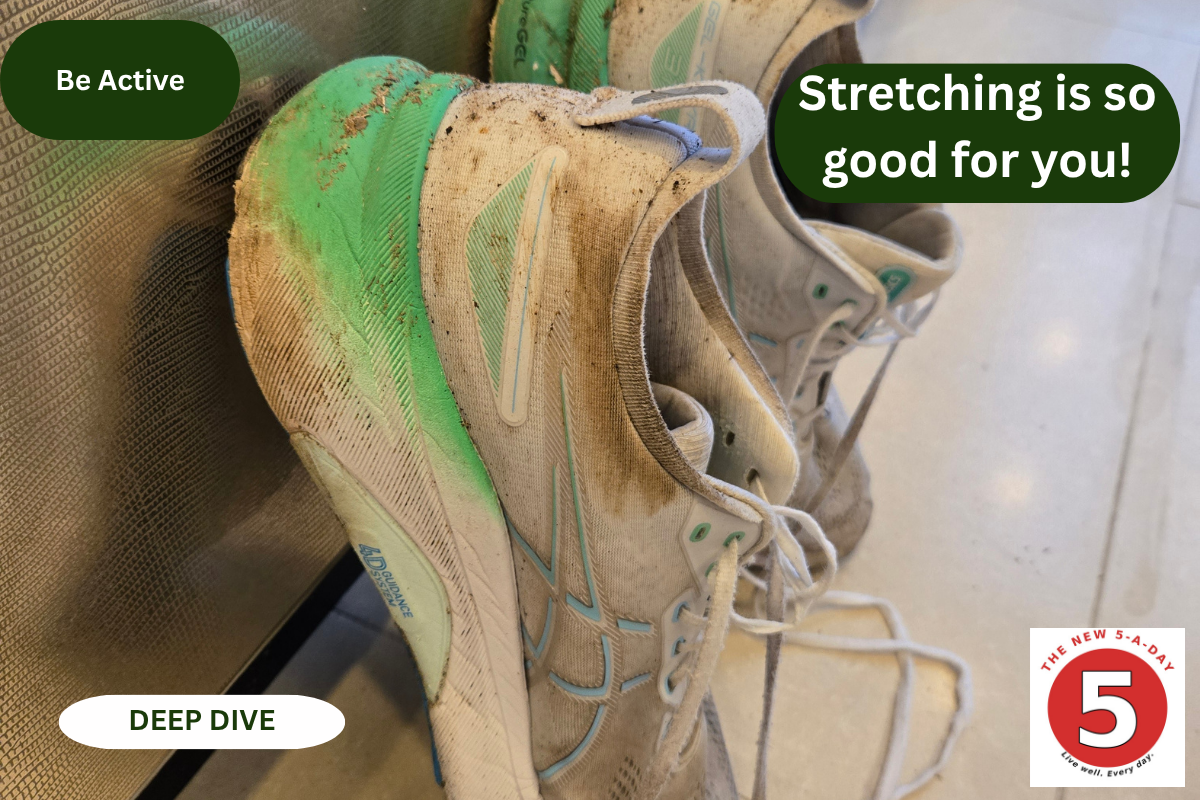
What stretching actually does to your body
The evidence for stretching improving flexibility and joint range of motion is robust — multiple meta-analyses confirm meaningful gains from regular programmes of two weeks or more, across all ages. Static and PNF (proprioceptive neuromuscular facilitation) stretching produce the largest long-term flexibility gains; dynamic stretching is well-suited to pre-activity warm-ups. Stretching improves gait speed and balance in older adults, with direct implications for fall prevention and independence. The widely held belief that post-exercise stretching speeds recovery or reduces muscle soreness is not supported — systematic reviews consistently show no meaningful benefit over passive rest for delayed-onset soreness, strength, or performance. Evidence for cardiovascular benefits (reduced arterial stiffness, lower resting blood pressure) is emerging and moderate; programmes typically require months of consistent practice and benefits reverse with detraining. Mental health claims for stretching alone are limited; strong evidence for relaxation and anxiety reduction comes from broader practices — yoga and progressive muscle relaxation — that incorporate stretching alongside breathwork and mindfulness. Strength training can produce ROM gains comparable to dedicated stretching. The practical prescription is simple: consistent, progressive flexibility work for major muscle groups, at least two to three times per week, done carefully and without forcing range.
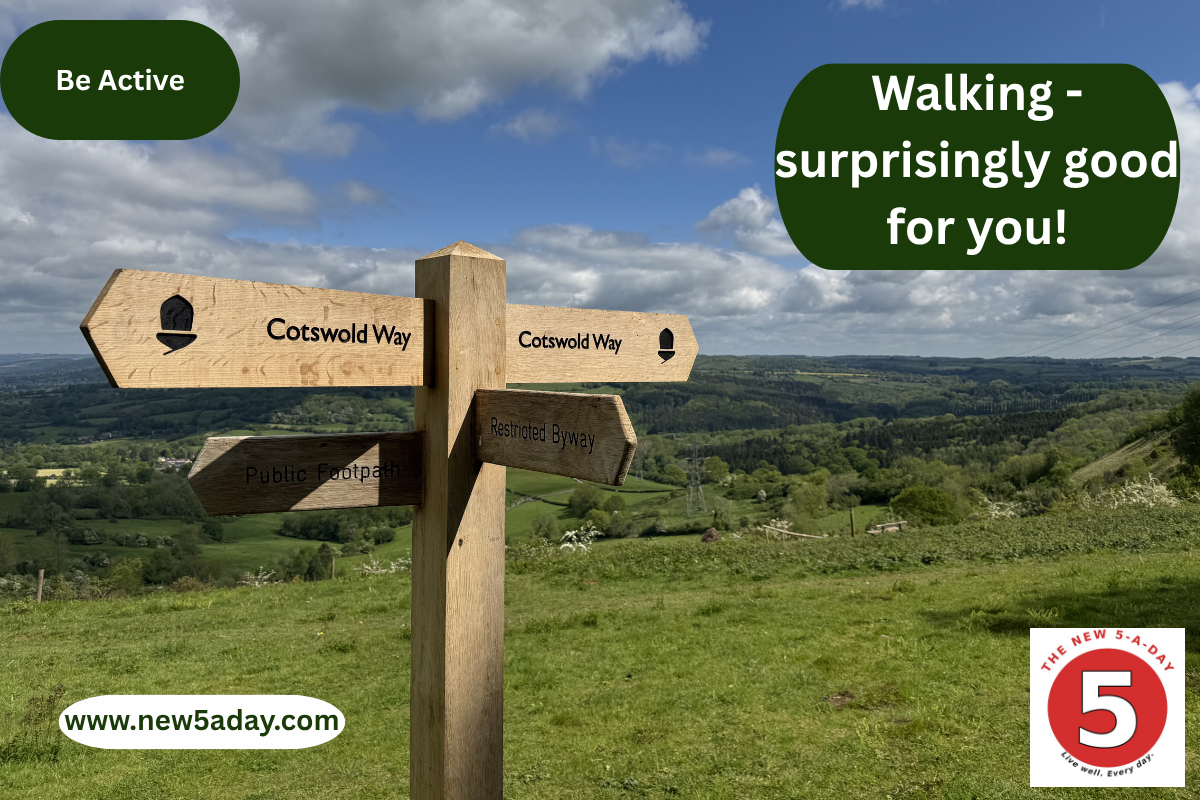
Walking is surprisingly good for you!
There is a persistent idea in our culture that exercise has to be hard to count. That unless you are sweating, tracking your heart rate, or grimacing at a spinning class, you probably haven't done enough. Walking — just walking — sits at the other end of the spectrum. It feels almost too ordinary to be exercise.
And that, rather surprisingly, is one of the most compelling things about it.
Walking is one of the most effective and accessible forms of exercise available. Regular walking reduces risk of heart disease, type 2 diabetes, and depression; improves mood, sleep, and brain health; and you do not need to walk 10,000 steps to benefit — research shows meaningful gains begin well below that. The best walk is the one you will actually do.
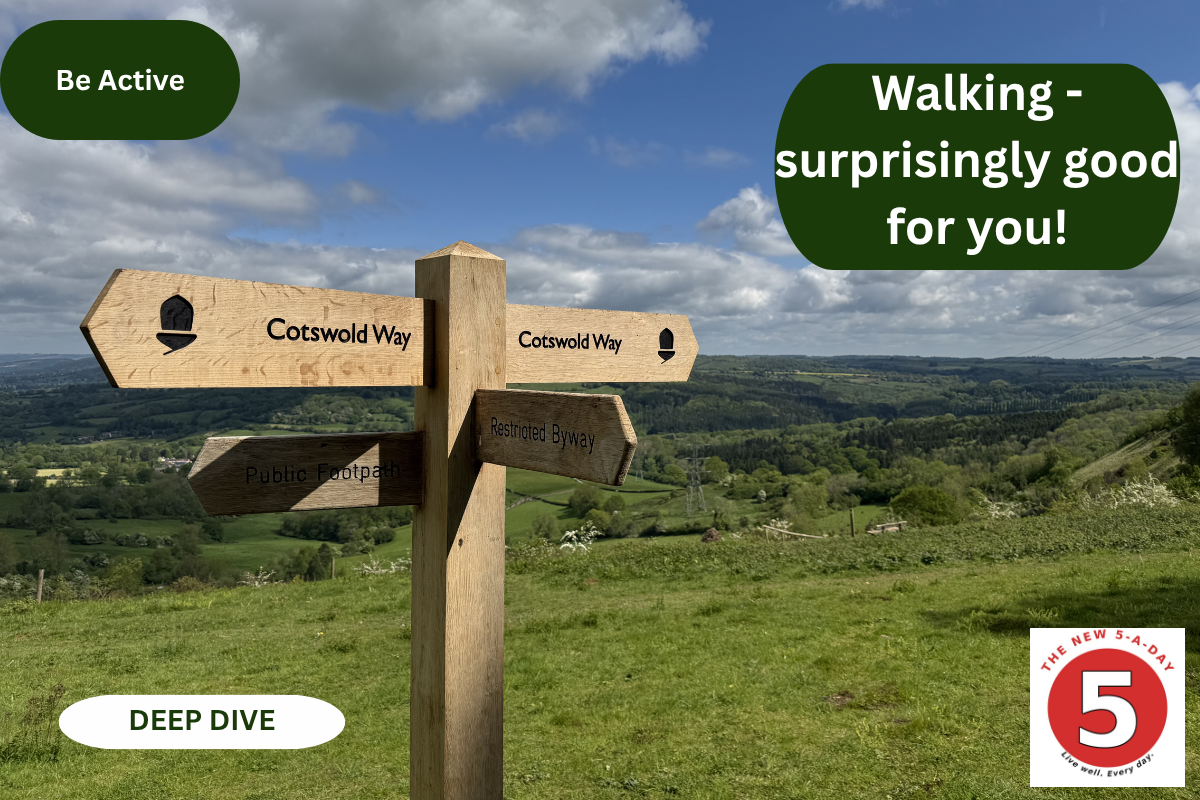
Deep Dive: 3. Walking is surprisingly good for you!
Walking's health benefits are among the most robustly evidenced in all of exercise science.
The latest research shows 7,000 steps/day is associated with a 47% reduction in mortality; walking reduces cardiovascular risk, dementia risk, and depression symptoms independently of intensity.
The 10,000-step target has no scientific basis. Consistency and volume matter more than speed. Benefits begin from any increase above a sedentary baseline.